How Geocoding Is Altering Student Recruitment
3 MINUTE READ

Colleges and universities are constantly seeking innovative ways to enhance their recruitment strategies. One technique gaining substantial traction is accurate geocoding. Geocoding is the process of converting addresses into geographic coordinates (latitude and longitude). This allows educational institutions to visualize and analyze spatial data accurately. With precise geocoding, universities can gain invaluable insights into the geographical distribution of prospective students, enabling a more targeted and efficient recruitment strategy.
Let’s explore how geocoding is reshaping student recruitment and why it stands as a game changer in this competitive domain.
Enhancing Targeted Marketing Strategies
When it comes to recruiting students, knowing where to focus your efforts can significantly improve outcomes. Accurate geocoding allows institutions to:
1. Identify Recruitment Hotspots
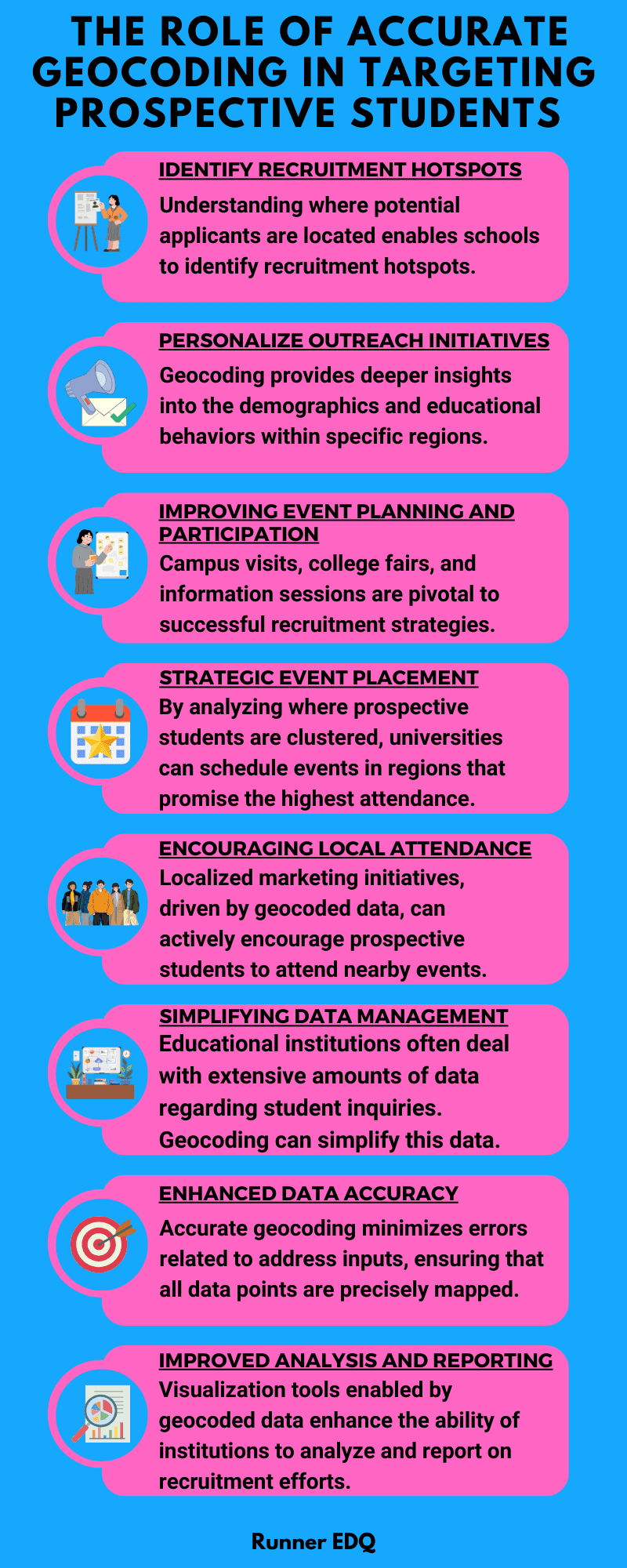
Understanding where potential applicants are located enables schools to identify recruitment hotspots. By grouping prospective students based on geographic data, colleges can focus their marketing efforts in areas with a higher concentration of interested individuals. This not only saves resources but also maximizes the impact of recruitment campaigns.
2. Personalize Outreach Initiatives
Geocoding provides deeper insights into the demographics and educational behaviors within specific regions. With this information, institutions can tailor their outreach initiatives to resonate more effectively with local cultures and preferences—resulting in higher engagement and application rates.
3. Improving Event Planning and Participation
Campus visits, college fairs, and information sessions are pivotal to successful recruitment strategies. Accurate geocoding aids in:
4. Strategic Event Placement
By analyzing where prospective students are clustered, universities can schedule events in regions that promise the highest attendance. This strategic placement ensures that resources are utilized optimally, enhancing the efficiency and effectiveness of each event.
5. Encouraging Local Attendance
Localized marketing initiatives, driven by geocoded data, can actively encourage prospective students to attend nearby events. Personalized invitations based on geographical proximity make potential applicants feel more valued and understood, increasing the likelihood of their participation.
6. Simplifying Data Management
Geocoding also simplifies the management and interpretation of large datasets. Educational institutions often deal with extensive amounts of data regarding student inquiries and applications. Geocoding these datasets ensures:
7. Enhanced Data Accuracy
Accurate geocoding minimizes errors related to address inputs, ensuring that all data points are precisely mapped. This leads to cleaner, more reliable datasets that can be easily analyzed to inform recruitment strategies.
8. Improved Analysis and Reporting
Visualization tools enabled by geocoded data enhance the ability of institutions to analyze and report on recruitment efforts. Schools can generate detailed maps and reports that highlight trends, successes, and areas for improvement, facilitating more informed decision-making.
RunnerEDQ's Role in Revolutionizing Student Recruitment
RunnerEDQ provides institutions with advanced geocoding solutions that transform student recruitment strategies. Our precise geocoding technology ensures that educational institutions can identify recruitment hotspots, personalize outreach initiatives, and strategically plan events with ease. By integrating our solutions, universities can manage their data efficiently, enhance their marketing efforts, and ultimately increase student enrollment.
Our commitment to accuracy and efficiency helps institutions overcome the challenges of modern recruitment, making RunnerEDQ an invaluable partner in your journey to reach and engage prospective students effectively.