Real-Time Data's Impact On The Customer Experience
3 MINUTE READ

As technologies advance and preferences shift, businesses must pivot quickly, a feat that’s impossible without the right insights at the right time. And that’s why real-time data processing has become the backbone of dynamic, instant customer engagement strategies that make companies stand out. Let’s explore how real-time data processing is transforming the customer experience landscape.
The Power of Now: Understanding Real-Time Data Processing
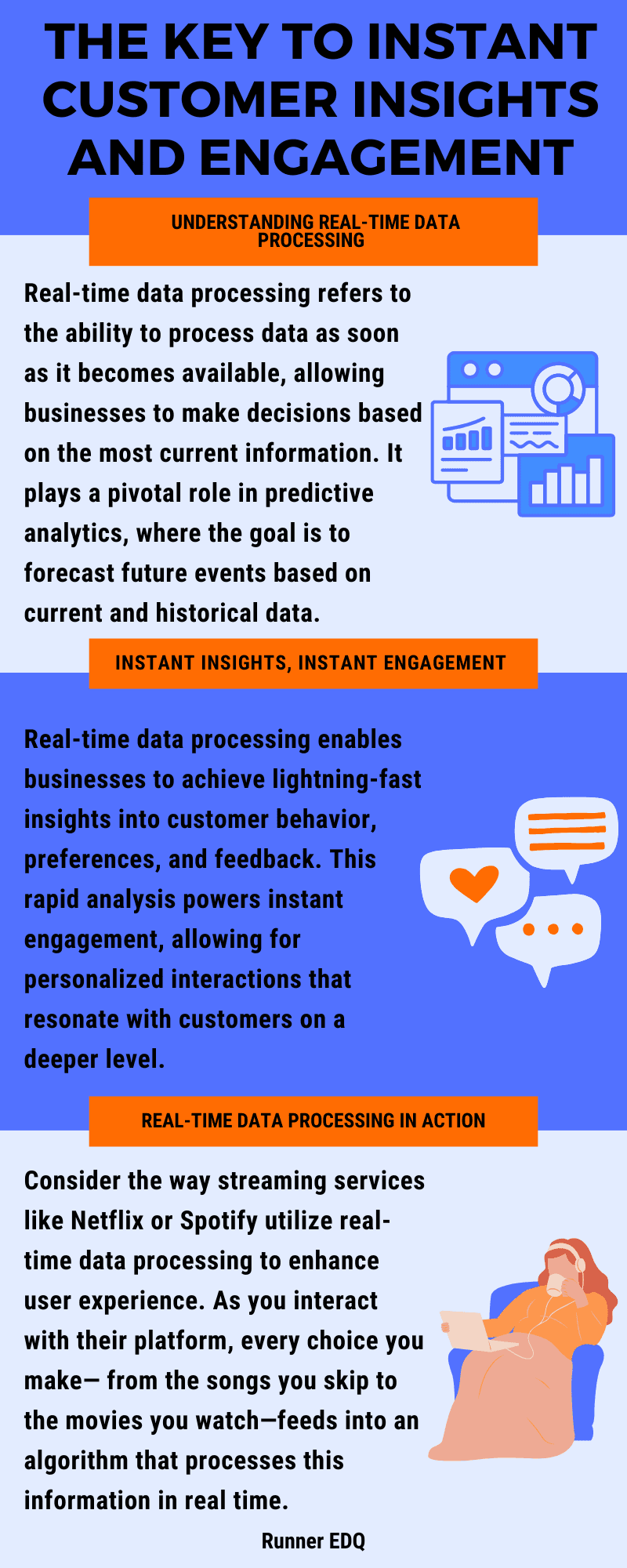
Real-time data processing refers to the ability to process data as soon as it becomes available, allowing businesses to make decisions based on the most current information.
Batch processing, while still relevant in certain contexts, operates under a deferred decision-making model. It's like reading yesterday’s newspaper to understand today’s news. In contrast, real-time data processing is about streaming the latest headlines directly to your device the moment they happen. This transition from a delayed to an instantaneous model marks a significant shift in how businesses can operate and compete.
Real-time data processing also plays a pivotal role in predictive analytics, where the goal is to forecast future events based on current and historical data. By continuously feeding the latest data into predictive models, businesses can refine their forecasts to be more accurate and timely. This real-time input makes predictions more relevant, be it for demand forecasting, fraud detection, or personalized recommendations.
Instant Insights, Instant Engagement
Real-time data processing enables businesses to achieve lightning-fast insights into customer behavior, preferences, and feedback. This rapid analysis powers instant engagement, allowing for personalized interactions that resonate with customers on a deeper level.
Personalization at Its Peak: Tailored product recommendations based on recent browsing history can significantly improve conversion rates. Real-time processing makes this personalization possible, enhancing the shopping experience for each customer.
Proactive Customer Service: By processing customer feedback and queries in real-time, businesses can proactively address issues, often before the customer expects a response. This level of service can transform customer satisfaction and loyalty.
Adaptive Marketing Strategies: Marketing campaigns can be adjusted in real-time based on how they are performing, ensuring resources are focused on the most effective strategies.
Real-Time Data Processing in Action
Consider the way streaming services like Netflix or Spotify utilize real-time data processing to enhance user experience. As you interact with their platform, every choice you make—from the songs you skip to the movies you watch—feeds into an algorithm that processes this information in real time. Based on this data, the service adjusts its recommendations, tailoring them to fit your preferences as closely as possible.
In the e-commerce sector, real-time data processing allows for dynamic adjustments in inventory and pricing. As customers shop, online retailers can track which products are popular, adjusting inventory levels and even pricing in real time to match demand.
In the e-commerce sector, real-time data processing allows for dynamic adjustments in inventory and pricing. As customers shop, online retailers can track which products are popular, adjusting inventory levels and even pricing in real time to match demand.
How Runner EDQ Enhances Your Real-Time Data Processing Capability
RunnerEDQ is at the forefront of facilitating seamless, real-time data processing solutions. Our services help ensure your data is not only accurate and accessible but actionable. With our cutting-edge tools and expertise, businesses can effortlessly integrate real-time data processing into their operations, unlocking instant insights that drive customer engagement and satisfaction.
In conclusion, real-time data processing isn't just a nice-to-have; it's a strategic imperative for businesses aiming to provide exceptional customer experiences. By enabling instantaneous insights and engagement, companies can stay ahead of the curve, personalize their services, and respond to market dynamics with agility.