Construc An Inclusive and Dynamic Workplace
3 MINUTE READ

Diversity and inclusion (D&I) efforts are not just ethical imperatives—they're also a competitive edge. But how do you build an authentic D&I initiative? That’s where accurate demographic data becomes key. Let’s explore how blending this data into your D&I strategy can sculpt a more inclusive and dynamic workplace.
Understanding the Demographics
Comprehensive and up-to-date demographic data provides a snapshot of where you are versus where you want to be. This data can offer valuable insights into various aspects of your workforce, including age, gender, ethnicity, ability, and more.
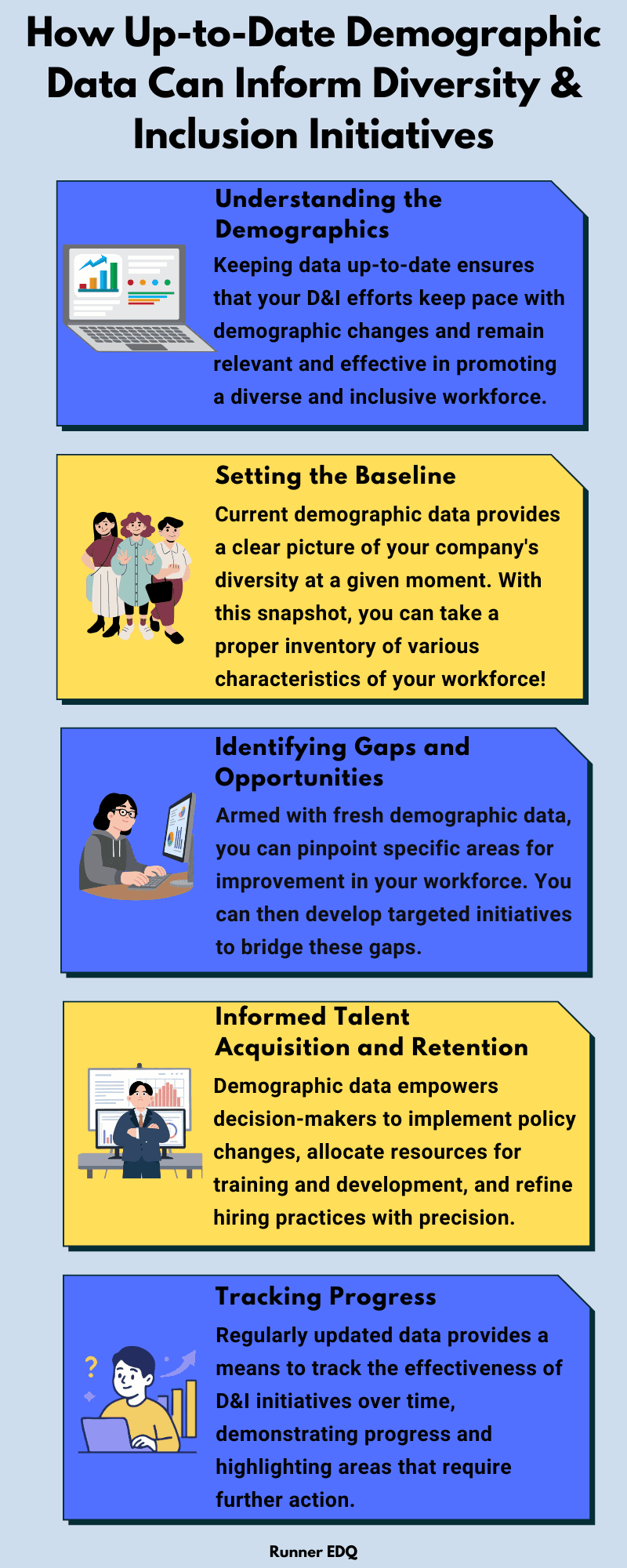
Demographics are dynamic—they change as society evolves. Keeping data up-to-date ensures that your D&I efforts keep pace with these changes and remain relevant and effective in promoting a diverse and inclusive workforce.
In essence, understanding your demographics is about giving depth to the numbers. With these insights, your D&I initiatives move beyond checking boxes. They become a roadmap for creating a workplace that not only values differences but leverages them for growth and innovation.
Setting the Baseline
In order to measure where you're headed, you have to know where you stand. Current demographic data provides a clear picture of your company's diversity at a given moment. With this snapshot, you take inventory of various characteristics of your workforce: not just the basics like age and gender, but also ethnicity, cultural background, languages spoken, veteran status, disability, education levels, and even tenure within the company.
Identifying Gaps and Opportunities
Armed with fresh demographic data, you can pinpoint specific areas for improvement in your workforce diversity. Are certain departments lacking gender balance? Is there a disparity in the representation of ethnic groups in leadership roles? Once identified, you can develop targeted initiatives to bridge these gaps.
A well-rounded demographic analysis doesn’t just spotlight areas requiring improvement; it can also illuminate strengths. Perhaps your data reveals that your company is more age diverse than the industry average, or you're leading the way in gender balance in tech roles. These strengths become points of pride, showcasing your D&I successes, and can be used to attract talent and clients alike.
Informed Talent Acquisition and Retention
To foster diversity, look at recruitment and retention strategies through the lens of your demographic data. This information informs and improves talent acquisition by identifying diverse recruiting sources and guides the creation of programs designed to support and retain a diverse workforce.
Demographic data empowers decision-makers within the organization to implement policy changes, allocate resources for training and development, and refine hiring practices with precision, directly targeting the needs highlighted by the data.
Tracking Progress
Demographic data isn’t static—it should inform ongoing efforts. Regularly updated data provides a means to track the effectiveness of D&I initiatives over time, demonstrating progress and highlighting areas that require further action.
Besides guiding D&I initiatives, demographic data holds companies accountable. It's also essential for compliance with certain governmental equal employment opportunity regulations. Regularly updating and analyzing this information safeguards against non compliance and supports transparent reporting to stakeholders.