Revolutionize How Institutions Maintain Relationships With Their Alumni.
3 MINUTE READ

Reconnecting with 'lost' alumni can sometimes feel like searching for a needle in a haystack. Yet, this endeavor is crucial for higher education institutions aiming to foster a strong alumni network and support fundraising activities. Enter the world of pCOA (permanent Change of Address) and mCOA (multiple Change of Address), two tools that are revolutionizing the way educational institutions maintain relationships with their alumni.
Understanding pCOA and mCOA
Permanent Change of Address (pCOA)
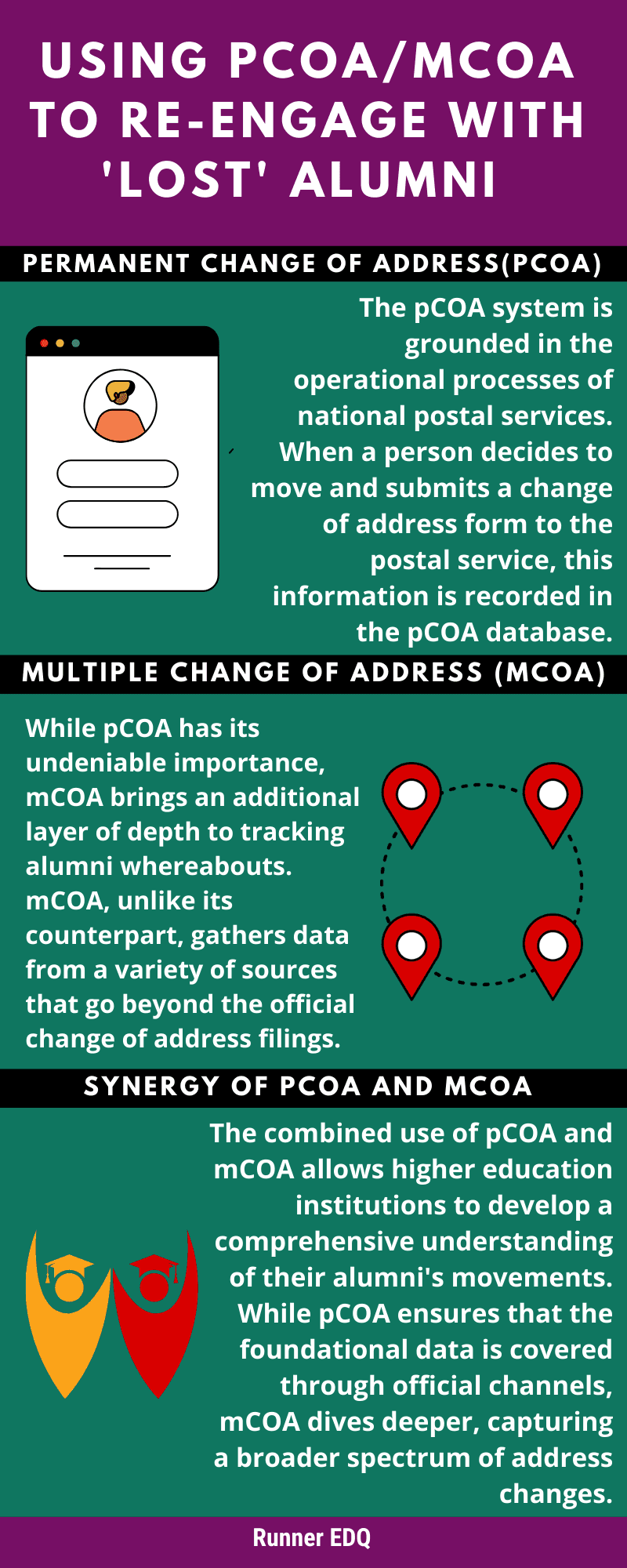
The pCOA system is grounded in the operational processes of national postal services. It is designed to keep track of individuals who have submitted an official change of their permanent address. When a person decides to move and submits a change of address form to the postal service, this information is recorded in the pCOA database. This database becomes a goldmine for various organizations, including higher education institutions, as it helps them maintain accurate mailing lists.
But why is pCOA so crucial for alumni engagement? The answer lies in its reliability and official status. Because the data comes directly from postal service records, it has a high level of accuracy. Educational institutions rely on this to ensure that any physical correspondence, such as newsletters, invitations to events, or fundraising appeals, reaches the alumni effectively. It helps in reducing the waste of resources spent on mailings that end up in the wrong hands or, worse, get returned as undeliverable.
Multiple Change of Address (mCOA)
While pCOA has its undeniable importance, mCOA brings an additional layer of depth to tracking alumni whereabouts. mCOA, unlike its counterpart, gathers data from a variety of sources that go beyond the official change of address filings. These sources include magazine subscriptions, club memberships, and transactions from credit card records. By aggregating this data, mCOA can offer insights into alumni movements that might not be captured through the postal system alone.
This multiplicity of data sources makes mCOA particularly valuable for identifying address changes that are less formal or not intended to be permanent. For instance, an alum might relocate for a few months for a short-term job assignment or an extended travel experience without formally changing their permanent address. mCOA’s broader net can catch these shorter-term relocations, offering a more dynamic and current overview of alumni locations.
Synergy of pCOA and mCOA
The combined use of pCOA and mCOA allows higher education institutions to develop a comprehensive understanding of their alumni's movements. While pCOA ensures that the foundational data is covered through official channels, mCOA dives deeper, capturing a broader spectrum of address changes. This dual approach enables institutions to significantly enhance the accuracy of their alumni databases.
Moreover, understanding the nuances between these two systems is key for formulating more effective engagement and communication strategies. By acknowledging the more fluid lifestyle patterns of today's alumni, institutions can tailor their outreach to be more relevant, timely, and personal. This relevance is crucial in motivating alumni to stay connected, attend events, and support their alma mater financially.
Navigating Challenges
While pCOA and mCOA offer promising solutions, navigating these databases requires a certain level of expertise and access to the right tools. This is where a partnership with data management experts can make all the difference.
Introducing RunnerEDQ
This is precisely where RunnerEDQ comes into play. Specializing in data quality and management solutions, RunnerEDQ provides higher education institutions with the tools they need to effectively utilize pCOA and mCOA data. From updating alumni records with current addresses to ensuring compliance with data protection regulations, RunnerEDQ simplifies the process of alumni re-engagement.
By leveraging RunnerEDQ’s services, institutions can confidently reconnect with 'lost' alumni, enhancing their fundraising efforts and fostering a vibrant, engaged alumni community.